
IPC ( INDIAN PENAL CODE )
1/20/20262 min read
IPC (Indian Penal Code) কী?
What is IPC (Indian Penal Code)?
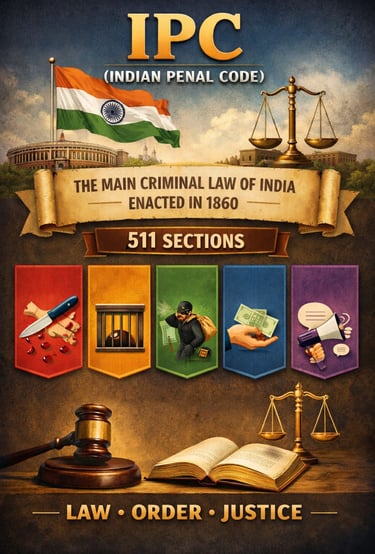
ইন্ডিয়ান পেনাল কোড (IPC) হলো ভারতের প্রধান ফৌজদারি আইন, যা ১৮৬০ সালে কার্যকর হয়। এই আইনে অপরাধের সংজ্ঞা, অপরাধের শ্রেণিবিভাগ এবং প্রতিটি অপরাধের জন্য শাস্তির বিধান রয়েছে। IPC-তে মোট ৫১১টি ধারা আছে। ধারা ৩০০-এ খুনের ব্যাখ্যা, ধারা ৩০২-এ খুনের শাস্তি, ধারা ৩৭৮-এ চুরি, ধারা ৪২০-এ প্রতারণা এবং ধারা ৪৯৯-এ মানহানির ব্যাখ্যা দেওয়া হয়েছে। এই আইন সমাজে ন্যায় ও শৃঙ্খলা বজায় রাখতে গুরুত্বপূর্ণ ভূমিকা পালন করে।
The Indian Penal Code (IPC) is the main criminal law of India, enacted in 1860. It defines various crimes, their classifications, and the punishments for each offense. The IPC contains 511 sections. For example, Section 300 defines murder, Section 302 prescribes punishment for murder, Section 378 explains theft, Section 420 deals with cheating, and Section 499 explains defamation. IPC plays a vital role in maintaining law, order, and justice in society.
গুরুত্বপূর্ণ ধারা গুলো হলো -
IPC (Indian Penal Code)-এর গুরুত্বপূর্ণ ধারা সমূহের বিস্তারিত আলোচনা -
Indian Penal Code (IPC) ভারতের প্রধান ফৌজদারি আইন, যা ১৮৬০ সালে প্রণীত হয়। এই আইনের বিভিন্ন ধারা সমাজে সংঘটিত অপরাধ, অপরাধের প্রকৃতি এবং সেই অপরাধের জন্য নির্ধারিত শাস্তি সম্পর্কে স্পষ্ট ধারণা দেয়। IPC-এর কিছু ধারা অত্যন্ত গুরুত্বপূর্ণ, কারণ এগুলো সাধারণ ও গুরুতর অপরাধের সঙ্গে সরাসরি সম্পর্কিত।
ধারা ২৯৯ ও ৩০০ মানুষের জীবন সংক্রান্ত অপরাধ নিয়ে আলোচনা করে। ধারা ২৯৯ ‘Culpable Homicide’ অর্থাৎ দোষজনক নরহত্যার সংজ্ঞা দেয়, আর ধারা ৩০০ ‘Murder’ বা খুন কী—তা ব্যাখ্যা করে। ধারা ৩০২-এ খুনের শাস্তি নির্ধারণ করা হয়েছে, যা মৃত্যুদণ্ড বা যাবজ্জীবন কারাদণ্ড হতে পারে।
ধারা ৩০৭ হত্যাচেষ্টার (Attempt to Murder) বিষয়ে, যেখানে কারও হত্যার উদ্দেশ্যে আঘাত করা হলেও মৃত্যু না হলে এই ধারা প্রযোজ্য হয়। ধারা ৩৭৬ ধর্ষণ সংক্রান্ত অপরাধ এবং তার কঠোর শাস্তির বিধান দেয়, যা সমাজে নারীর সুরক্ষার জন্য অত্যন্ত গুরুত্বপূর্ণ।
সম্পত্তি সংক্রান্ত অপরাধের মধ্যে ধারা ৩৭৮ চুরির সংজ্ঞা দেয় এবং ধারা ৩৭৯ চুরির শাস্তি নির্ধারণ করে। ধারা ৩৯২ ডাকাতি এবং ধারা ৩৯৫ দস্যুতার বিষয়ে আলোচনা করে। প্রতারণা সংক্রান্ত গুরুত্বপূর্ণ ধারা হলো ৪২০, যা প্রতারণা করে সম্পত্তি আত্মসাতের অপরাধ ব্যাখ্যা করে।
সম্মান ও মর্যাদা রক্ষার জন্য ধারা ৪৯৯ মানহানির সংজ্ঞা দেয় এবং ধারা ৫০০ মানহানির শাস্তি নির্ধারণ করে। এছাড়া ধারা ৫০৪ ও ৫০৬ ইচ্ছাকৃত অপমান এবং ভয় দেখিয়ে অপরাধমূলক হুমকি দেওয়ার বিষয়ে প্রযোজ্য।
সব মিলিয়ে IPC-এর গুরুত্বপূর্ণ ধারা সমূহ সমাজে আইনশৃঙ্খলা বজায় রাখতে, মানুষের জীবন, সম্পত্তি ও সম্মান রক্ষা করতে গুরুত্বপূর্ণ ভূমিকা পালন করে। এই ধারাগুলোর মাধ্যমে অপরাধ নিয়ন্ত্রণ ও ন্যায়বিচার নিশ্চিত করা হয়।
The Indian Penal Code (IPC) is the backbone of criminal law in India. It was enacted in 1860 and provides a comprehensive definition of crimes, their nature, and the punishments prescribed for them. The IPC plays a crucial role in maintaining law, order, and justice in society. Some sections of the IPC are especially important because they deal with serious and commonly occurring offenses.
Sections 299 and 300 deal with offenses against human life. Section 299 defines Culpable Homicide, which refers to causing death with intention or knowledge. Section 300 explains when culpable homicide amounts to Murder, making the offense more severe in nature. Section 302 prescribes punishment for murder, which may include the death penalty or life imprisonment, along with a fine.
Section 307 relates to Attempt to Murder. Even if death does not occur, any act done with the intention or knowledge that could cause death is punishable under this section. It highlights that intention behind the act is very important in criminal law.
Crimes against women are addressed under several important sections. Section 376 deals with the offense of rape and prescribes strict punishment, reflecting the seriousness of the crime and the need to protect the dignity and safety of women.
Property-related offenses are covered under various sections. Section 378 defines Theft, while Section 379 provides punishment for theft. Section 392 deals with Robbery, and Section 395 explains Dacoity, which involves robbery committed by five or more persons. These sections are vital for protecting property and ensuring public safety.
Cheating and fraud are covered under Section 420, which explains cheating and dishonestly inducing delivery of property. This section is frequently applied in cases involving financial fraud and deception.
The IPC also protects an individual’s reputation. Section 499 defines Defamation, and Section 500 prescribes punishment for defamation. These sections ensure that a person’s dignity and reputation are safeguarded against false statements and accusations.
Additionally, Sections 504 and 506 deal with intentional insult and criminal intimidation, ensuring that threats, abuse, and coercion are treated as punishable offenses.
In conclusion, the important sections of the IPC collectively protect life, property, dignity, and public order. They serve as a legal framework to prevent crime, punish offenders, and ensure justice, making the IPC an essential pillar of the Indian legal system.