
Criminal Law & Civil Law :
Criminal Law is a branch of law that deals with offences committed against society or the state.
1/20/20262 min read
Criminal Law ও Civil Law :
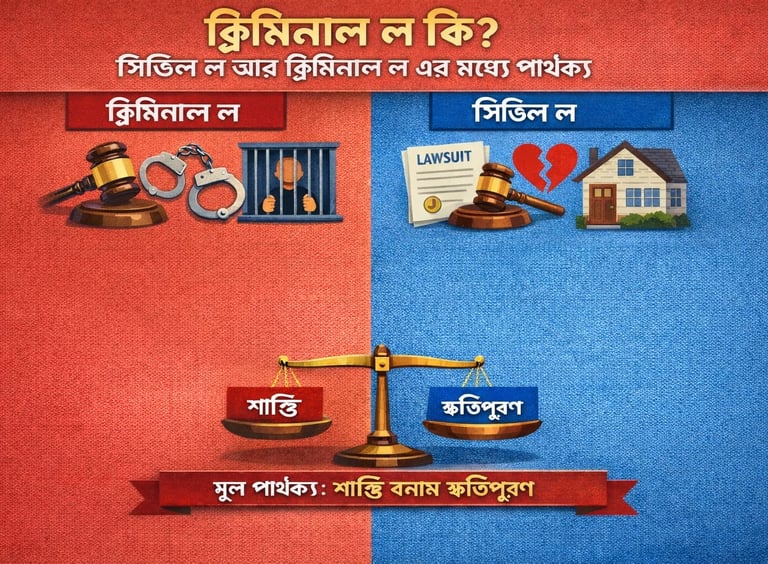
ক্রিমিনাল ল (Criminal Law) বা ফৌজদারি আইন:- হলো সেই আইনব্যবস্থা, যা সমাজ, রাষ্ট্র ও জনসাধারণের বিরুদ্ধে সংঘটিত অপরাধ নিয়ন্ত্রণ করে।
Criminal Law is a branch of law that deals with offences committed against society or the state.
এই আইনের মূল উদ্দেশ্য হলো অপরাধ প্রতিরোধ করা, সমাজে শৃঙ্খলা বজায় রাখা এবং অপরাধীর উপযুক্ত শাস্তি নিশ্চিত করা।
The primary objective of criminal law is to maintain social order, prevent crime, and punish offenders.
খুন, ধর্ষণ, চুরি, ডাকাতি, জালিয়াতি, সাইবার ক্রাইম, মানব পাচার ইত্যাদি গুরুতর অপরাধ ক্রিমিনাল ল-এর আওতাভুক্ত।
Crimes such as murder, rape, theft, robbery, fraud, cybercrime, and human trafficking fall under criminal law.
এই ধরনের মামলায় সরকার বা রাষ্ট্র নিজেই বাদী হিসেবে অভিযুক্তের বিরুদ্ধে মামলা পরিচালনা করে।
In criminal cases, the state acts as the prosecutor against the accused.
অপরাধ প্রমাণিত হলে অভিযুক্তকে কারাদণ্ড, জরিমানা বা আইন অনুযায়ী অন্যান্য শাস্তি দেওয়া হয়।
If the offence is proven, punishment may include imprisonment, fines, or other penalties prescribed by law.
সিভিল ল (Civil Law) বা দেওয়ানি আইন:- ব্যক্তিগত ব্যক্তি, পরিবার, প্রতিষ্ঠান বা সংস্থার মধ্যে সৃষ্ট বিরোধ ও অধিকার সংক্রান্ত বিষয় নিয়ে কাজ করে।
Civil Law deals with disputes between individuals, families, organizations, or institutions.
এই আইনের উদ্দেশ্য কাউকে শাস্তি দেওয়া নয়, বরং ক্ষতিগ্রস্ত পক্ষকে ক্ষতিপূরণ দেওয়া বা তার অধিকার পুনরুদ্ধার করা।
The purpose of civil law is not to punish the wrongdoer but to provide compensation or enforce legal rights.
জমি ও সম্পত্তি সংক্রান্ত বিরোধ, চুক্তি ভঙ্গ, বিবাহবিচ্ছেদ, ভরণপোষণ, উত্তরাধিকার, মানহানি ও ক্ষতিপূরণ মামলা সিভিল ল-এর অন্তর্ভুক্ত।
Matters such as property disputes, breach of contract, divorce, maintenance, inheritance, defamation, and compensation claims are governed by civil law.
সিভিল মামলায় সাধারণত ক্ষতিগ্রস্ত ব্যক্তি নিজেই মামলা দায়ের করেন আইনি প্রতিকার পাওয়ার জন্য।
In civil cases, the affected party files the case to seek legal remedy.
সংক্ষেপে বলা যায়, ক্রিমিনাল ল অপরাধ ও শাস্তির সঙ্গে যুক্ত, আর সিভিল ল ব্যক্তিগত অধিকার ও আইনি প্রতিকারের সঙ্গে যুক্ত।
In simple terms, criminal law focuses on crime and punishment, while civil law focuses on rights and remedies.
ক্রিমিনাল ল দণ্ডমূলক (punitive) এবং সিভিল ল প্রতিকারমূলক (remedial) প্রকৃতির।
Criminal law is punitive in nature, whereas civil law is remedial.
উভয় আইনই সমাজে ন্যায়বিচার প্রতিষ্ঠা, অধিকার রক্ষা এবং শান্তি ও শৃঙ্খলা বজায় রাখার জন্য অত্যন্ত গুরুত্বপূর্ণ।
Both legal systems play a vital role in ensuring justice, protecting rights, and maintaining peace and order in society.
সিভিল ল (Civil Law) এবং ক্রিমিনাল ল (Criminal Law) আইন ব্যবস্থার দুটি গুরুত্বপূর্ণ শাখা, তবে এদের উদ্দেশ্য ও প্রয়োগ ভিন্ন।
ক্রিমিনাল ল সমাজ ও রাষ্ট্রের বিরুদ্ধে সংঘটিত অপরাধ নিয়ে কাজ করে। এর প্রধান উদ্দেশ্য হলো অপরাধ প্রতিরোধ করা এবং অপরাধীকে শাস্তি দেওয়া। খুন, ধর্ষণ, চুরি, ডাকাতি, জালিয়াতি, সাইবার ক্রাইম ইত্যাদি অপরাধ ক্রিমিনাল ল-এর আওতায় পড়ে। এই ধরনের মামলায় রাষ্ট্র বা সরকার বাদী হয় এবং অপরাধ প্রমাণিত হলে অভিযুক্তকে জেল, জরিমানা বা অন্যান্য শাস্তি দেওয়া হয়।
অন্যদিকে, সিভিল ল ব্যক্তিগত ব্যক্তি, পরিবার বা প্রতিষ্ঠানের মধ্যে সৃষ্ট বিরোধ ও অধিকার সংক্রান্ত বিষয় নিয়ে কাজ করে। এর লক্ষ্য শাস্তি দেওয়া নয়, বরং ক্ষতিগ্রস্ত পক্ষকে ক্ষতিপূরণ দেওয়া বা তার অধিকার পুনরুদ্ধার করা। যেমন—জমি ও সম্পত্তির বিবাদ, চুক্তি ভঙ্গ, বিবাহবিচ্ছেদ, ভরণপোষণ, উত্তরাধিকার, মানহানি ইত্যাদি সিভিল ল-এর অন্তর্ভুক্ত।
আরও একটি গুরুত্বপূর্ণ পার্থক্য হলো প্রমাণের মানদণ্ড। ক্রিমিনাল মামলায় অপরাধ সন্দেহের ঊর্ধ্বে প্রমাণ করতে হয়, কিন্তু সিভিল মামলায় তুলনামূলক কম প্রমাণেই রায় দেওয়া হয়। সংক্ষেপে, ক্রিমিনাল ল অপরাধ ও শাস্তির সঙ্গে যুক্ত, আর সিভিল ল অধিকার ও প্রতিকারের সঙ্গে যুক্ত।
Civil Law and Criminal Law are two major branches of the legal system, but they differ in purpose and application.
Criminal Law deals with offences committed against society or the state. Its primary objective is to prevent crime and punish offenders. Crimes such as murder, rape, theft, robbery, fraud, and cybercrime fall under criminal law. In criminal cases, the government or state acts as the prosecutor. If the offence is proven, the accused may be punished with imprisonment, fines, or other penalties.
In contrast, Civil Law focuses on disputes between private individuals, families, or organizations. The main aim of civil law is not to punish the wrongdoer but to provide compensation or enforce legal rights. Matters such as property disputes, breach of contract, divorce, maintenance, inheritance, and defamation are governed by civil law.
Another key difference lies in the standard of proof. In criminal cases, the offence must be proven beyond reasonable doubt, whereas in civil cases, decisions are made based on the balance of probabilities.
In simple terms, criminal law is concerned with crime and punishment, while civil law deals with rights and remedies. Both systems are essential for maintaining justice, order, and fairness in society.